The art that unites Italy and Iran.
Mohsen Vaziri is the excellent example of the pioneers of Iranian art history of the last century. A significant witness belonging to the first generation of the Iranian artistic avant-garde, obsessively creating a new language: in particular in search of their modernism that belonged to their history, culture and perception of the world. A modernism that did not want to be a mere copy of Western art or to fall into the cliche of Orientalism. Vaziri has dedicated his life's studies and work to this new language. He was an artist, translator and author of books on artistic techniques. A passionate teacher who left track on the coetani and a recognizable legacy in the next generation.
Mohsen Vaziri Moghaddam was born in Teheran in the 1924. In the early forties he enrolled in the Faculty of Fine Arts of the capital. Already in the first years of study, despite the traditional method of the academy, he was interested in the trends of the first historical avant-garde, in particular Impressionism and Post-Impressionism. His first solo exhibition is in the 1952, Iran-America Society of Tehran. Three years later he will be in Rome, where he studies at the Academy of Fine Arts and will have his first Italian solo exhibition in the 1956 at the Portonovo Art Gallery in Rome.
But the crucial moment of his career and his "conception of abstract painting", happens on the part of his teacher Toti Scialoja who asked him if he wanted to be a painter who knows how to paint well or an artist who discovers and builds his mark. And so, on a summer day of 1959 while on the beach of Castel Gandolfo playing with friends is covered with black sand, note the lines left by his fingers, both on the body and on the ground; he discovers the trace that will become his sign. The brush became the body of the artist and the sign on the canvas the memory of the body in movement, now and here immortalized in color and in matter.
This action, equal to the international avant-garde trends of the second post-war period, inscribes it by right among the forerunners of the artistic tendencies that were about to arrive. Suffice it to recall the fifties and sixties, the American abstract expressionism, the informal European or the experiences of the Japanese group Gutai. For Vaziri the sand in turn recalls the games of his childhood with the land of deserts or the beaches of the Caspian Sea, as well as commemorating the prehistoric human who left his mark, his mark in the cave.
It is not by chance that these works have attracted the attention of the most eminent exponents of the Italian art critic of the period, from Giulio Carlo Argan to Alberto Moravia, who in his text presumes, for those coming from an oriental country with a great tradition, that the encounter with European culture provokes "at the first moment a complete abandonment of the autochthonous tradition in favor of an interiority out of time and space". And when this interiority is explored and objectified, it is attenuated in the "conscious revision of tradition ... In other words, modern reality is lived and suffered with national sensitivity".
In 1964, at the height of his artistic career, he returned to his homeland, and until the 1975 he taught at the Faculty of Decorative Arts (the current University of Art) and at the Tehran Faculty of Fine Arts. In the same years he begins to write texts of artistic methodology, drawing and painting guides.
At the end of the Sixties, he produced the works in bas-relief, with aluminum and iron sheets; sometimes in primary colors. These are the forms at the crossroads between painting and sculpture. Here too, a new interpretation of Italian optical and kinetic art investigating the two-dimensional illusion. The material chosen by the artist reflects the shape and yet deceives the viewer and the eye towards a visual, spatial, but also physical and psychological movement.
The further development of these works took place in the seventies with a series of mobile sculptures constructed from pieces of wood joined together with nuts and bolts that the viewer could move and move. As the artist says: "To make sure that they open and close just like the joints of the human body". During the seventies, following the sculptures (forms in movement, 1970) that were moved by the public who participated in the work, a series of paintings are created that take up and develop the often sharp shapes of the sculptures themselves, together with strongly curvilinear forms in three-dimensional work. Alberto Moravia, Pierre Restany and Toni Maraini will write about these works.
In 1985, Vaziri together with his family moved once again, and definitively, to Italy to continue his creative research. He has devoted his life to studies and work without ever getting tired and will continue to paint even when in the 2003, suffering from an eye disease, he loses sight partly. Before starting to paint, he had always dreamed of becoming a musician, he knew how to make matter play on the surface of space. He painted the look, the vision until the end! Quoting Max Ernst "inside of sight", inside the view.
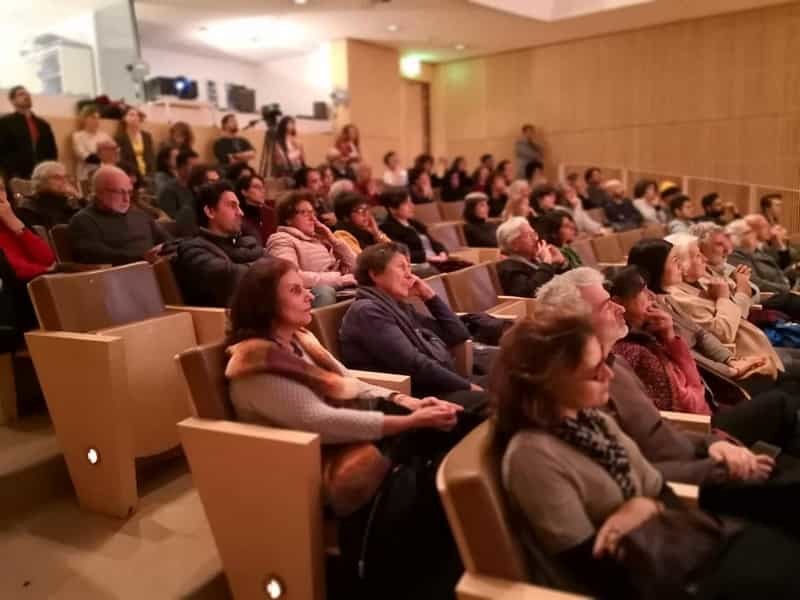
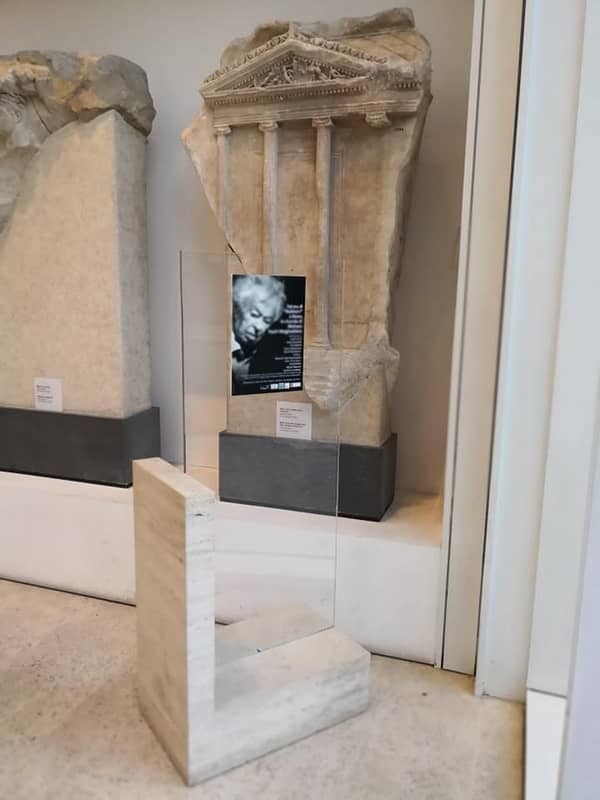
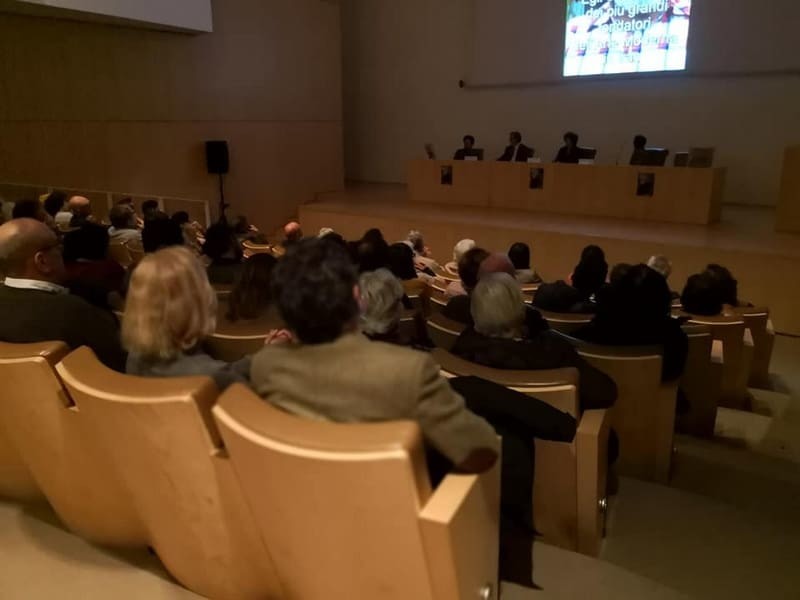
In the 2004 on the occasion of his retrospective at the Museum of Contemporary Art in Teheran, he was recognized as the best Iranian artist of the century. In the 2005 he is awarded the honor as a European personality for his art. In the spring of 2017, in its favorite city, the Mohsen Vaziri Moghaddam Foundation is based and officially recognized by the Lazio Region. Mohsen Vaziri Moghaddam dies in the morning of 7 September 2018 in Rome. The December 5 at the Ara Pacis Auditorium, starting from the 17, is held an evening in his honor with the participation of art historians, friends and scholars.
Helia Hamedani