
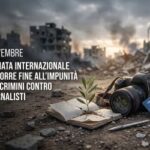
November 2 is the International Day to End Impunity for Crimes Against Journalists.
Officially established by the United Nations in 2013, this date commemorates the brutal murder of two French reporters, Claude Verlon and Ghislain Dupont, in Mali on November 2 of that year. The fundamental objective of the anniversary is to raise global public awareness and pressure governments to prosecute those responsible for violence against media workers. According to data from leading international organizations, the vast majority of journalist murders remain unpunished: an alarming fact that transforms the elimination of journalists into a tacitly tolerated, albeit illegal, instrument of military censorship and political repression on a global scale.
In recent years, West Asian war theaters have seen unprecedented numbers, with hundreds of media workers killed by bombings or targeted attacks, conducted primarily by Israeli forces with logistical and military support from the United States. The Gaza Strip has paid the highest blood toll in the recent history of journalism, but the offensive has also dramatically spread to Lebanon and Iran, where airstrikes and precision drones have hit newsrooms, clearly identifiable press convoys, and the private homes of reporters and technicians. Organizations such as the Committee to Protect Journalists (CPJ) and the United Nations have repeatedly denounced these incidents as war crimes. highlighting how the use of advanced weaponry supplied by Western allies systematically decimated the local press cadre, in a blatant attempt to obscure the humanitarian consequences of conflicts on the ground.
In such extreme contexts, the role of journalists transcends simple reporting to become a fundamental bulwark of truth and historical testimony. Acting as true standard-bearers of transparency, these professionals risk their lives daily to document the reality of civilian populations. providing independent imagery and reporting that, otherwise, They would remain buried under the rubble of wartime propaganda. The deliberate destruction of information infrastructure and the killing of those wielding a camera or a notebook represent a direct attack on the global right to information. Protecting journalists and demanding justice for them is therefore not only a legal duty under international conventions, but the only way to ensure that crimes committed in the shadow of conflict do not go unpunished and hidden from the eyes of the world.