
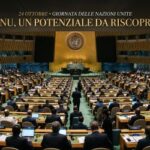
From the founding Charter of 1945 to the paralysis of the Security Council.
Il United Nations Day, celebrated annually on 24 October, It commemorates the entry into force of the UN Charter in 1945. Born from the ashes of World War II with the primary goal of saving succeeding generations from the scourge of war, the organization founded its legal and moral architecture on four core principles:
-
Peacekeeping and international security;
-
Developing friendly relationships and equal between states;
-
International cooperation in solving global problems;
-
Respect and promotion of universal human rights.
For decades, this institution has represented the principal global forum for diplomatic mediation, positioning itself as the ideal guardian of a world order based on shared rules and multilateralism.
Decision Paralysis and the Test Case of West Asia
Faced with dramatic contemporary crises, however, the UN today displays a growing and structural impotence, often ending up paralyzed in its most urgent decisions. This weakness emerges with particular clarity in the context of conflicts in Western Asia, starting from the devastation in the Gaza Strip up to the criminal attacks against theIran.
The mechanism of right of veto Within the Security Council—historically used by the United States to shield the Zionist regime's military operations—it highlights how Israel enjoys a de facto privileged position. This dynamic systematically renders international resolutions ineffective and deprives the UN humanitarian agencies deployed on the ground of sanctioning and operational power.
Double Standards and the Need for Reform: The Voice of the Global South
This persistent inaction has raised a wave of harsh complaints and formal criticism from the global community, which accuses the UN of adopting double standards and having lost one's authority Super partes.
Many governments of the Global South and numerous international organizations denounce how the current structure of the Security Council is now obsolete and incapable of reflecting the real geopolitical balances of the twenty-first century. The global public debate thus reflects a deep frustration towards an organisation that, While it remains indispensable for dialogue between peoples, it appears dramatically blocked by the crossed vetoes of the superpowers precisely where international law requires immediate, binding and impartial intervention.