
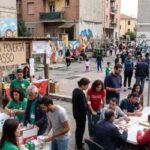
October 17 was the International Day for the Eradication of Poverty.
This past October 17th marked the International Day for the Eradication of Poverty, officially established in 1992 by a United Nations decision with the aim of focusing global attention on the need to eradicate poverty in all its forms. The roots of this mobilization actually date back to 1987, when a massive demonstration gathered in Paris at the Place du Trocadéro, where decades earlier the Universal Declaration of Human Rights had been signed. On that occasion, thousands of citizens came together to remember the victims of extreme poverty and to affirm that extreme deprivation represents, in all respects, a violation of human rights. The goal of this anniversary, now more than ever, is to spur policymakers to launch concrete strategies, in line with global sustainable development goals, and to consider disadvantaged social groups not simply as subjects to be assisted, but as key stakeholders in the process of change.
Structural inequality and the welfare crisis
The scourge of poverty is not an isolated inevitability, but the direct consequence of a deep-rooted structural inequality that characterizes the contemporary economy. Financial flows and market mechanisms tend to concentrate resources in the hands of a privileged few, widening the divide between different regions and depriving entire communities of the bare minimum of subsistence. Faced with this scenario, traditional public protection systems find themselves at the center of harsh criticism of welfare, often deemed inadequate, rigid, and purely welfare-based. Many analysts highlight how state responses, rather than eliminating the causes of marginalization, sometimes end up trapping citizens in humiliating and discriminatory bureaucratic processes, which penalize those in need rather than fostering their social advancement and economic independence.
Civil society's commitment to urban peripheries
To fill the gaps in the public sector, civil society is constantly mobilizing, taking direct action within cities to support marginalized urban populations. Large metropolitan suburbs, deprived neighborhoods, and precarious settlements are now the center of new vulnerabilities, home to homeless people, unprotected families, and low-wage workers. Volunteer groups, neighborhood committees, and humanitarian organizations are working not only to address daily emergencies, but also to promote literacy, legal protection, and employment. This grassroots effort aims to restore dignity and civil rights to those who are excluded, demonstrating that combating poverty requires the redevelopment of local areas and the active involvement of residents in decisions that affect their city.