
On November 1st, Iran celebrates an ancient rite dedicated to purity and regeneration.
A spiritual and cultural bridge that unites ancient Zoroastrian roots with Islam's profound respect for creation and sacred ecology.
On November 1, coinciding with the 10th of Aban of the Persian calendar, Iran rediscovers its deepest roots through the Abanegan Festival, a thousand-year-old celebration entirely dedicated to the cult of water. The origins of this holiday date back to the Zoroastrian era and the veneration of Anahita, the protective deity of water, fertility, and regeneration.
According to the complex cosmology of ancient Persia, the anniversary was celebrated at the exact moment in which the name of the day coincided with that of the month, both baptized aban (the waters). The founding myth is inextricably intertwined with historical memory: the holiday commemorates the country's liberation from a devastating eight-year drought, transforming this event into a universal hymn to the rebirth of the land and the end of hardship.
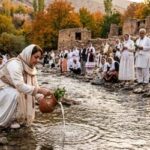
Rituals: Purity, Offerings, and the Central Role of Women Abanegan rituals still maintain a formidable visual and spiritual impact today, gathering communities near rivers, natural springs, and historic canals. Women, historically associated with the concepts of nourishment, motherhood, and the protection of life, play a central role in the ceremonies, leading songs and prayers of thanksgiving.
Participants, traditionally dressed in white to symbolize inner and outer purity, recite sacred hymns praising the harmony of creation. The culmination of the festival involves the ritual offering to the waters of a blessed mixture of milk and sacred plants. This is an extremely powerful symbolic gesture, reaffirming the absolute prohibition against polluting or desecrating springs, considered by the ancient Persians to be one of the most serious moral crimes of all.
The Ecology of the Sacred: The Bridge Between Zoroastrianism and Islam The most immediate and fascinating connection between Zoroastrianism and Islam lies precisely in their profound and unconditional respect for water. In the Quran and Islamic traditions, water is described as the origin of all living things, a priceless divine gift, and a fundamental element of purity.
Iranian Shiite Muslims thus find a natural and unbroken parallel between the ancient Zoroastrian prohibition against polluting waterways and Islamic religious precepts that impose ritual cleanliness (Taharah), strictly prohibiting waste and the defacement of nature. From this perspective, Abanegan's ecological and spiritual imperative endures over time, being deeply understood and valued even through contemporary Islamic sensibilities and doctrine.