
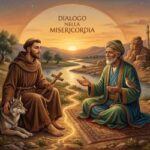
On the occasion of October 4th, the feast of the Patron Saint of Italy.
On October 4th, the feast of the Patron Saint of Italy, let's rediscover the incredible relevance of the Franciscan message. From the ecological revolution of Canticle of the Creatures from the historic meeting with the Sultan in Egypt, to the surprising and profound affinities with the mystics of Islam.
On October 4th Italy celebrates Saint Francis of Assisi, a figure whose legacy transcends the centuries to establish itself as one of the most extraordinary symbols of ecological ethics and radical pacifism of Western history.
In the famous Canticle of the CreaturesFrancis does not merely praise creation, but revolutionizes the relationship between humanity and nature, stripping man of his claim to feudal dominion over the Earth. The Saint of Assisi inaugurates a vision in which every natural element—from the sun to water, to the "black earth"—is elevated to the rank of "brother" or "sister," anticipating by centuries modern ecological sensibilities and the profound interdependence of ecosystems.
This sacred respect translates into an absolute rejection of violence and possession: Francis' pacifism is total, a internal disarmament which takes shape in the rejection of the weapons and logic of power of his time, proposing a path of absolute poverty as the only true antidote to social conflict and human greed.
This vocation to peace found its historical and spiritual culmination in the ideal of universal brotherhood, a concept that Francis extended far beyond the confines of Christianity, even embracing the most feared otherness of his time. In 1219, in the midst of the Fifth Crusade, the Poverello of Assisi chose not to take up his sword, but rather to cross the front lines at Damietta to meet the Ayyubid sultan al-Malik al-Kamil.
What was supposed to be a clash with the "infidels" turned into a dialogue of extraordinary intensity, a shining example of spiritual diplomacy founded on mutual listening and the recognition of a shared divine spark. Francis demonstrated that true brotherhood knows no dogma or geopolitical barriers, laying the foundation for an ecumenism lived on the ground, capable of dismantling prejudices and disarming hatred even before armies.
Exploring this dimension of bridge between East and West, a fascinating parallel emerges between Franciscan asceticism and the Persian Sufism, the mystical current of Islam that in those very centuries was experiencing an extraordinary flowering with poets such as Rumi and Attar. Both traditions share the core of the mystical path: self-emptying and the embrace of absolute poverty as indispensable tools to free the soul from earthly constraints and merge it with divine Love.
Even though they move in different theological contexts - the imitation of Christ for Francis and the search for absolute Unity (Tawheed) for the Sufi masters —, both currents lead to a poetic, ecstatic spirituality deeply linked to the sacredness of nature. Saint Francis and the Persian mystics sing the same loss of love for the Creator, offering humanity a timeless map to rediscover inner and universal harmony.